Designing in the Open - Leading with Collaboration and Clarity

Overview
As a Senior and then Lead Product Designer at a fast-moving B2B SaaS company, I tackled the evolving challenge of cross-functional collaboration. Aggressive deadlines highlighted the critical need for earlier alignment and visibility.This spurred an ongoing initiative to dismantle design’s “black box,” fostering an open, integrated process that significantly accelerated feature delivery and built stronger team cohesion.

Key Impacts

  • Accelerated design readiness by 1–2 sprints, improving feature delivery speed
  • Reduced last-minute delivery risk by surfacing feasibility and misalignment earlier
  • Fostered a culture of open, participatory design across 3 scrum teams

The Challenge

Design Was a Black Box, Not a Shared Process

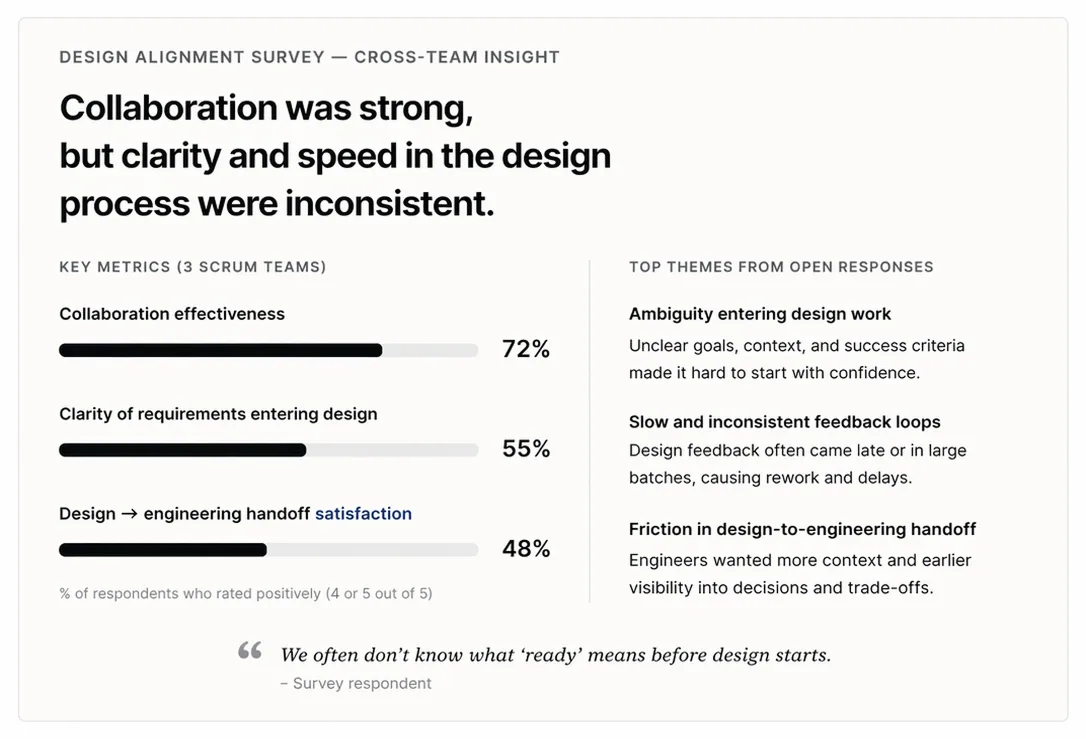
As our teams scaled, the design process wasn’t keeping pace with the growing complexity of cross-functional collaboration. Too often, design felt disconnected, a black box that others couldn’t see into or influence early enough.

This created growing friction:

  • Sprint planning lacked clarity on what was ready, leading to last-minute compromises.
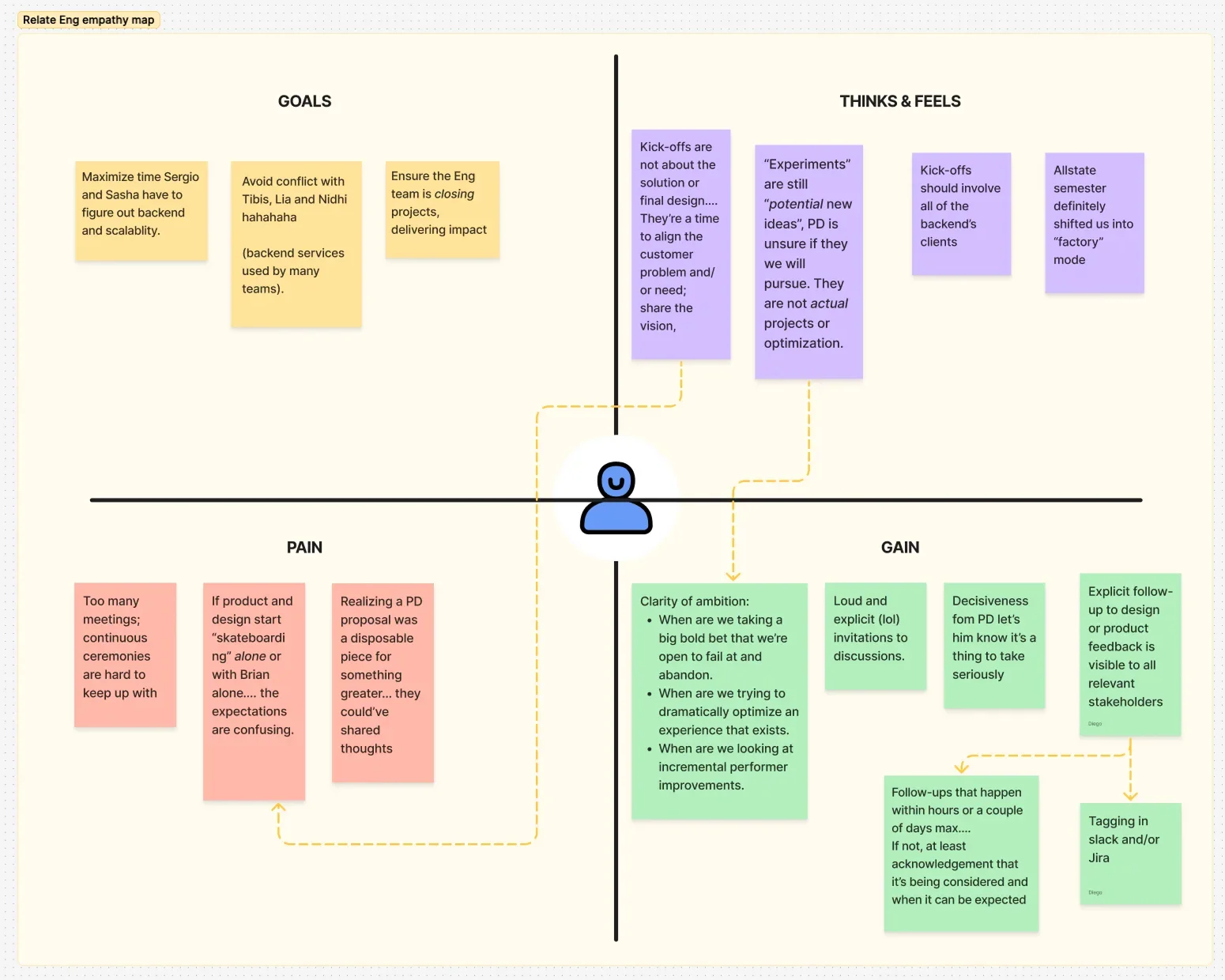
  • Engineers wanted earlier input and visibility to validate feasibility.
  • PMs and EMs lacked a shared view into design progress, rationale, and readiness.

Design wasn’t intentionally siloed, but without clear visibility and rituals, collaboration broke down. We needed to make design more accessible, transparent, and participatory across all disciplines, without slowing teams down.

My Role

Design Leadership and Facilitation

As the lead Product Designer, I drove a cross-functional initiative to integrate design more deeply within three scrum teams, collaborating closely with three Product Managers and their respective engineering counterparts. My focus was on making the design process transparent and collaborative, acting as both a strategic leader and a hands-on facilitator.

My responsibilities included:

  • DesignOps Strategy
  • UX Process Design
  • Cross-functional Facilitation
  • Strategic Alignment

Innovating as a Team

Making Engineering Part of Design

One goal was to transition from a handoff model to a shared design process, making engineering a true partner in shaping the direction.

What I Did:

  • Involved engineers early in exploration and prototyping, validating feasibility faster.
  • Ran weekly Design Office Hours to review work in progress and shape direction together.
  • Presented lean design proposals scoped to MVP, then refined them collaboratively.

Why It Worked:

  • Trade-offs were addressed early, which reduced rework and increased technical feasibility.
  • A prioritized backlog of must-haves and stretch goals provided teams with delivery confidence.

Impact:

“Rod consistently seeks early feedback on designs and workflow mockups, fostering productive discussions between design and engineering.”

2024 Peer Review Feedback

“His designs often have the pragmatic/expedient option, but he also shares a broader vision engineering can work toward.”

2024 Peer Review Feedback

Working in Public

Designing Out Loud

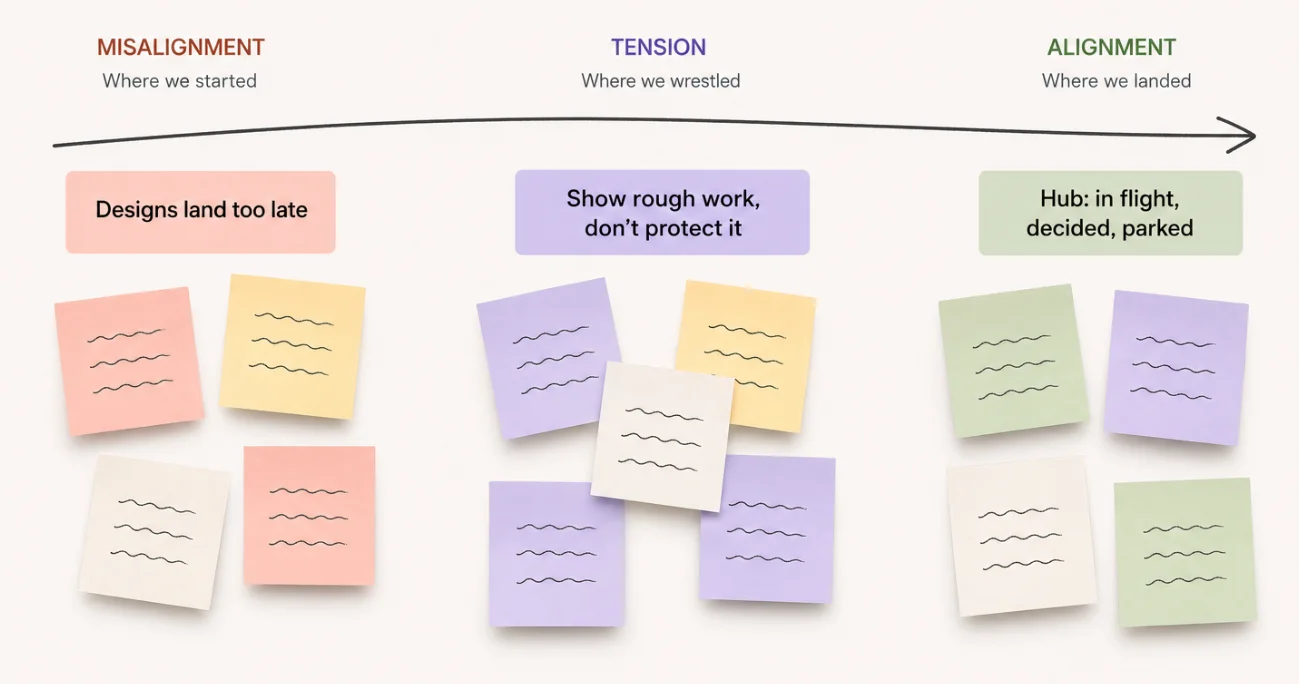
To reduce confusion and misalignment, I prioritized visibility from the earliest stages.

What I Did:

  • Shared rough drafts, not just polished deliverables.
  • Centralized collaboration in Miro and FigJam, enabling asynchronous feedback across disciplines.
  • Maintained a living design hub updated weekly, the team’s single source of design truth.

Why It Mattered:

  • Created a shared mental model across teams.
  • Surfaced misalignment early, avoiding costly delays.
  • Enabled a faster feedback loop across PM, EM, and engineering.

Impact:

“Opening up your work in progress for more frequent feedback from a broader range of stakeholders has actually made you stronger.”

2024 Peer Review Feedback

Embedding in Agile

Becoming a Full Member of the Scrum Team

Design can easily fall out of sync with agile teams. I embedded myself fully into scrum rituals to ensure design wasn’t a blocker  or an afterthought.

What I Did:

  • Participated in daily standups, planning, refinement, and retros.
  • Used those moments to share WIP, flag risks, and align direction.
  • Sequenced design delivery around dev readiness, in collaboration with PMs and EMs.

Why It Helped:

  • Eliminated big handoffs. Engineering understood the work before dev started.
  • Prevented feasibility surprises from blocking delivery.
  • Boosted trust that design was integrated and responsive.

Impact:

“Rod’s decision to regularly join standups when he had updates improved transparency and kept engineering teams aligned with design work.”

2024 Peer Review Feedback

“He played a key role in strengthening the collaboration between design and engineering this year.”

2024 Peer Review Feedback

You have high standards for yourself… you’re learning how to get your team on that same wavelength, without creating friction or “stoppers” for advancement, but moving alongside them and leading them into doing better things.

Diego A. CabreraProduct Design Manager

Leading Through Design

Visual Storytelling for Strategic Alignment

Beyond just shipping designs, I empowered the team to think more visually and strategically. I championed early visual storytelling using sketches and wireframes, transforming abstract ideas into tangible concepts that fostered deep understanding and alignment across disciplines.

What I Did:

  • Used sketches and lightweight wireframes to make complex ideas tangible fast, providing clear visual narratives of user flows and system interactions.
  • Shared rough concepts and rationale visually from the earliest stages, ensuring everyone could “see” the problem and proposed solution.
  • Facilitated collaborative feedback sessions around these early visuals, creating a shared space for diverse perspectives to shape direction.

Why It Mattered:

  • Accelerated decision-making by surfacing and resolving critical questions visually, long before high-fidelity design.
  • Built a shared mental model across product, engineering, and design, ensuring teams were literally on the same page.
  • Drove earlier alignment on strategy and technical feasibility, significantly reducing late-stage surprises and rework.

Impact:

“Early wireframe/concept sharing allowed us to accelerate the process: frequent and extended EPD feedback led to constant iteration, while keeping all Eng teams aligned.”

2024 Peer Review Feedback

“You’re learning how to get your team on that same wavelength, without creating friction or stalling progress.”

2024 Peer Review Feedback

Keeping Users at the Center

Sharing Insights to Drive Alignment

To ensure engineering had clear context for why we were building certain features, I prioritized regularly sharing user research and pain points as part of our design process.

What I Did:

  • Embedded key user insights and pain point summaries into design reviews, sprint planning, and standups.
  • Maintained a living repository of user feedback (from usability tests, support tickets, and interviews) that engineering could reference asynchronously.
  • Highlighted user quotes and impact scenarios alongside prototypes to make the rationale behind design decisions more tangible.

Why It Mattered:

  • Provided engineering with a direct line of sight into the real problems we were solving, increasing engagement and empathy.
  • Helped teams understand not just feature specifications, but also the broader context and intended outcomes.
  • Reduced back-and-forth by grounding decisions in clear user evidence, not just design intuition.

By consistently integrating user voices into everyday collaboration, we built stronger cross-functional alignment and delivered work that was more purposeful and more likely to meet real needs.

Reflection

Designing the Way We Work

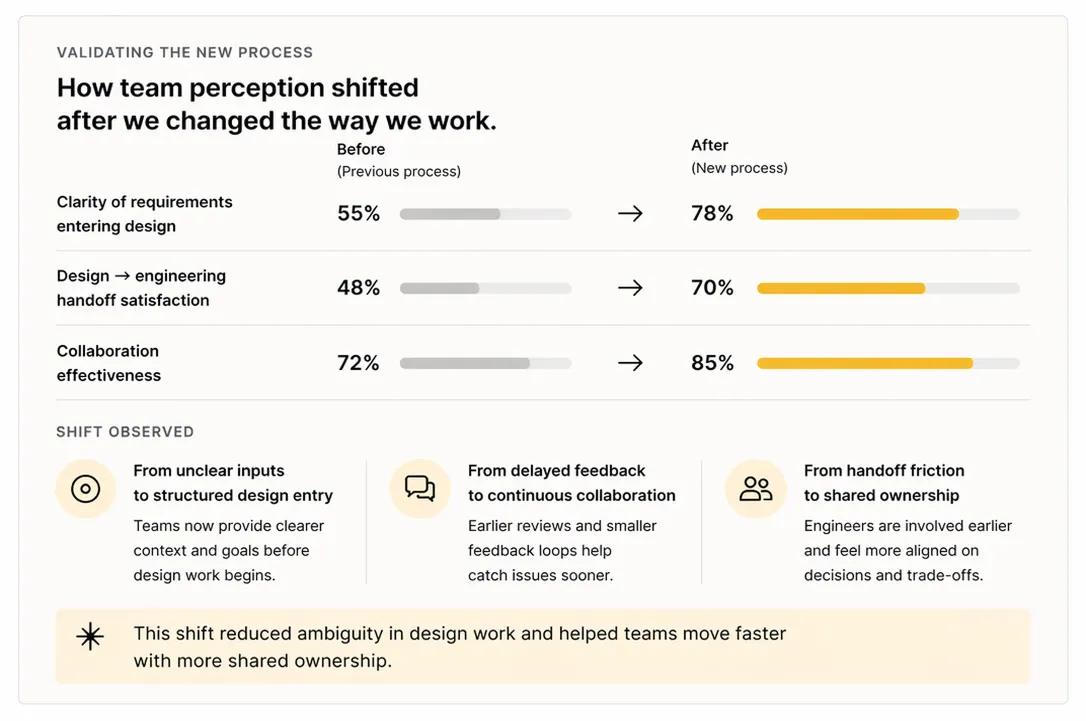
Design leadership isn’t just about pixels; it’s about how we solve problems together. By improving rituals, increasing visibility, and fostering shared ownership, I helped the team operate with greater cohesion across three active Scrum teams.

These changes led to tangible business outcomes:

  • Faster delivery: Design aligned with development cycles, accelerating readiness by 1–2 sprints.
  • Fewer blockers: Early visibility reduced late-stage misalignment and delivery risk.
  • Stronger team cohesion: Shared tools and rituals built trust and transparency across disciplines.

While this wasn’t tied to a single feature, the outcomes were foundational: smoother delivery, increased velocity, and greater confidence across teams, all of which are critical for scaling design in a fast-paced B2B SaaS environment.